Europe’s New Border System Is Live — and ETIAS Is Coming Next
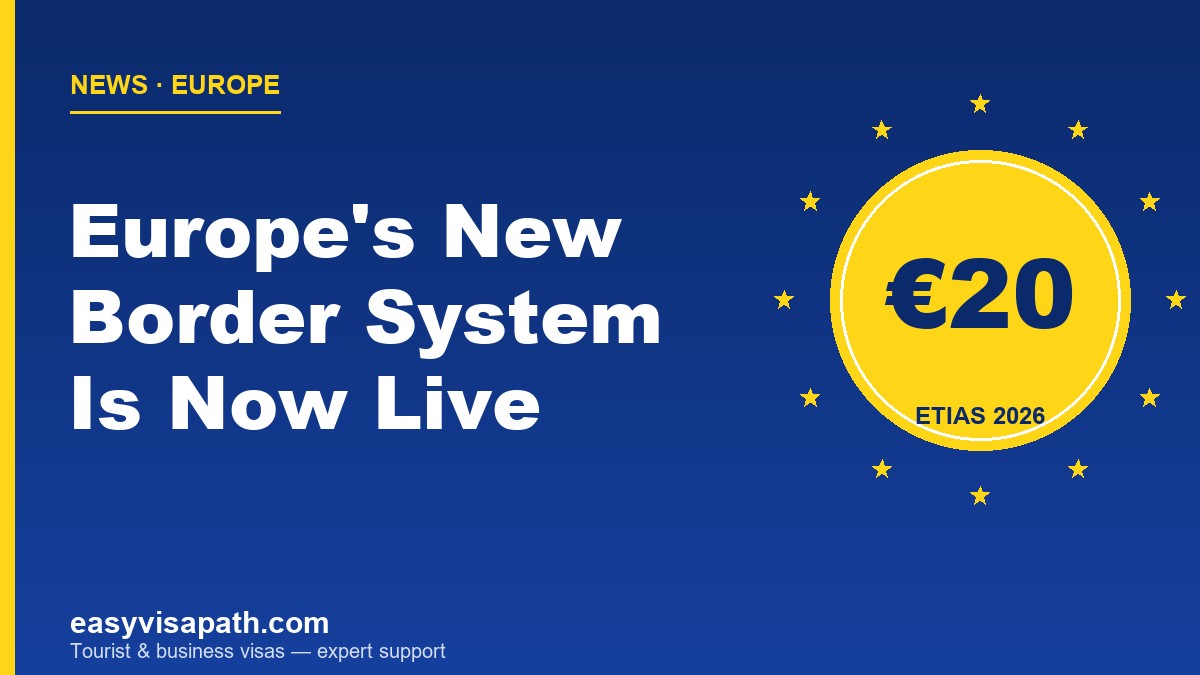
Europe has quietly changed how it checks travelers at the border. The EU’s Entry/Exit System (EES) is now fully operational across the Schengen area, replacing manual passport stamps with biometric records. A second system, ETIAS, is expected to follow — the EU is targeting late 2026, though reports suggest it could slip into 2027. Together they change what short-stay visitors must do — even those who travel to Europe without a visa.
Last updated: 15 October 2026. Dates and details are set by the EU and can change — confirm them on the official source linked at the end before you travel.
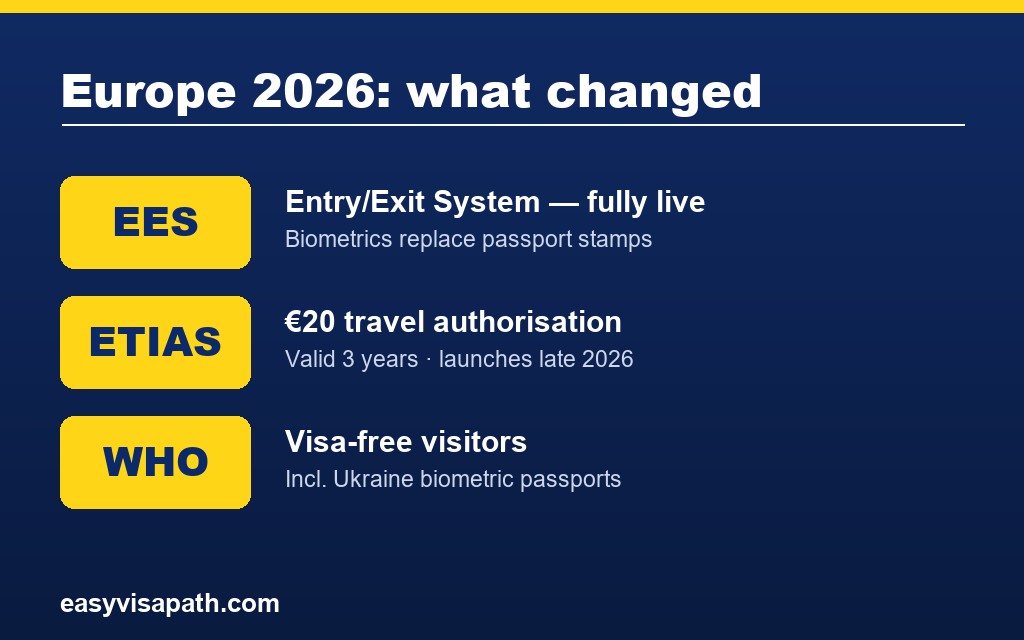
What the EES is — and what changed
The EES registers non-EU nationals each time they cross an external Schengen border for a short stay. Instead of a stamp, the system records your name, travel document, facial image and fingerprints, plus the date and place of entry and exit. It applies to both visa holders and visa-free visitors. The system was phased in from October 2025 and is now fully operational. Your first registration takes a little longer; later crossings are faster.
The 90/180 rule still applies
The EES does not change how long you can stay — short-stay visitors may remain up to 90 days in any 180-day period. What changes is that the clock is now tracked automatically and precisely, so overstays are far easier to detect.
ETIAS: a €20 authorisation, expected around late 2026
ETIAS (European Travel Information and Authorisation System) is a separate requirement for visa-exempt travelers. It is not a visa — it is an online authorisation you obtain before you go. The main points:
- Cost: €20 per application (exemptions apply, for example travelers under 18 or over 70).
- Validity: up to three years, or until your passport expires.
- Who needs it: nationals of visa-free countries — including the US, UK, Canada, Australia and Ukraine (biometric-passport holders who enter Schengen without a visa).
- When: the EU is targeting the last quarter of 2026, but some reports suggest it may slip into 2027. The exact start date will be announced several months in advance.
- After launch there will be a transitional period, so first-time travelers are not refused solely for not yet holding an ETIAS.
You cannot apply yet — applications open only once the EU launches the system.
Who does NOT need ETIAS
If you hold a Schengen visa or an EU residence permit, you do not need ETIAS — your visa or permit already authorises your entry. ETIAS is only for travelers who enter visa-free. This matters for clients who obtain a Schengen tourist visa: you follow the visa route, not ETIAS.
What this means for you — a short checklist
- Traveling to Europe visa-free (US/UK/CA/AU or a Ukrainian biometric passport)? Watch for the official ETIAS start date and apply as soon as it opens — before booking non-refundable travel close to the date.
- At the border, expect a short biometric registration (photo and fingerprints) the first time under the EES. Allow extra time on your first crossing.
- Keep your passport valid well beyond your trip — both systems tie to the document you register.
- Need a Schengen visa instead (for nationalities that are not visa-free)? ETIAS does not apply — we help you prepare the visa application.
Official information: the EU “Travel to Europe” portal (ETIAS) at travel-europe.europa.eu. Always confirm current dates before you plan. Not sure whether you need a Schengen visa or just an ETIAS? Tell us your passport and trip — EasyVisaPath will point you to the right path.