Can You Renew a U.S. B1/B2 Visa Without an Interview in 2026?
Renewing a U.S. B1/B2 visa without attending an interview is still possible, but the rules are considerably narrower than most people remember. Two long-standing age exemptions are gone, and the conditions that remain are strict. This article sets out who may qualify, what the embassy can still decide, and how to check your own position before you pay.
Last updated: 5 September 2026. Interview waiver criteria have been tightened more than once. Confirm the current conditions on the official source linked at the end, and on your embassy’s own page, before assuming you qualify.
What an interview waiver actually is
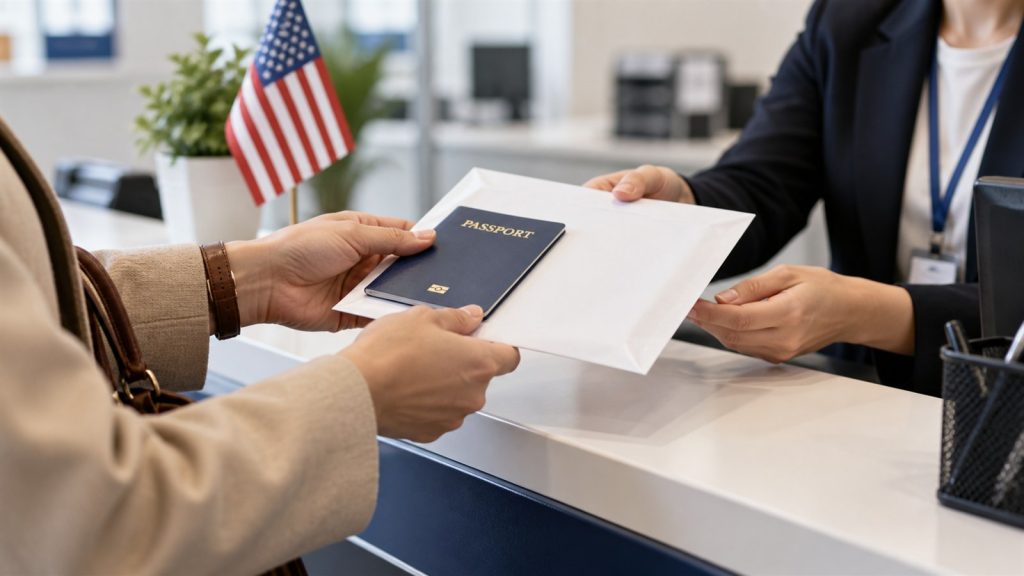
An interview waiver — often called “dropbox” — lets a returning applicant submit documents without appearing in person. You still complete a DS-160, still pay the visa fee, and your case is still adjudicated by a consular officer. The only thing removed is the in-person appointment, and only if the post agrees to remove it.
Who may qualify
The conditions normally applied to B1/B2 renewals are:
- You are renewing a visa in the same category that expired within the last 12 months.
- The previous visa was issued for its full validity — not a shortened or limited-entry issuance.
- You were at least 18 years old when that previous visa was issued.
- You are applying in your country of nationality or usual residence.
- You have never been refused a visa, unless that refusal was overcome or waived.
- You have no apparent or potential ineligibility.
All of them have to be true at once. Missing a single condition — a visa that expired thirteen months ago, an application filed in a country you are only visiting — puts you back into the normal interview queue.
The age exemptions are gone
Children under 14 and applicants over 79 are no longer automatically exempt from interviews. If you are planning a family application on the assumption that the youngest and oldest members are exempt, that assumption no longer holds.
Qualifying is not the same as being granted
This is the part applicants most often misunderstand. Meeting every condition makes you eligible to be considered for a waiver. It does not entitle you to one. A consular officer can require an in-person interview in any case, for any reason, and posts routinely do so. Plan on the basis that you might be called in.
Practically, that means not booking non-refundable travel around an assumed dropbox timeline, and keeping the documents you would have taken to an interview ready anyway.
How a previous refusal affects you
A prior refusal generally removes waiver eligibility unless it was later overcome or formally waived. A refusal under section 214(b) — the common “insufficient ties” outcome — counts, even if you were approved on a later attempt. If your history includes any refusal, assume you will be interviewed and prepare accordingly rather than hoping the system overlooks it.
Where you apply still matters
The waiver route requires applying in your country of nationality or usual residence — the same principle now applied to interviews generally. A Ukrainian legally residing in Belgium applies in Brussels; someone applying in a country they are merely visiting does not qualify, and may not be scheduled at all. Our article on where B1/B2 applicants should apply covers this rule in full.
What this means for applicants
If your visa is still valid or recently expired, the single most useful thing you can do is act inside the 12-month window — that window is what most people lose by waiting. If you are outside it, or have a refusal in your history, treat a full interview as the default and prepare properly. Either way, check your own embassy’s page: posts publish their own dropbox instructions, and they differ. If you hold a ten-year visa, our article on why a 10-year U.S. visa is valuable explains what you are protecting.
Quick self-check
You may qualify if every line is true:
Any unchecked line means you should plan for an interview.
Frequently asked questions
My visa expired two years ago. Can I use the waiver?
No. The renewal window is 12 months after expiry. Outside it, a normal interview appointment is required.
Are children still exempt from interviews?
Not automatically. The former exemptions for applicants under 14 and over 79 no longer apply, so plan for the whole family to attend.
Does qualifying mean I will not be interviewed?
No. A consular officer can still require an in-person interview in any case. Eligibility only means you may be considered for a waiver.
I was refused once, then approved later. Do I qualify?
Generally not, unless the refusal was formally overcome or waived. Assume an interview and prepare for it.
Do I still need a DS-160 and the fee?
Yes. The waiver removes the appointment, not the application. You complete the DS-160 and pay the fee as normal.
Conclusion
Interview waivers still exist for B1/B2 renewals, but they now reward people who renew promptly, in the right country, with a clean visa history. Check the conditions honestly, renew inside the 12-month window if you can, and prepare as though you will be interviewed. Being called in is then an inconvenience rather than a problem.
How EasyVisaPath can help
EasyVisaPath is an independent visa-support service. We check your renewal eligibility against the current criteria, complete the DS-160, and prepare you for an interview if the post requires one. Learn more about our support.
Disclaimer
EasyVisaPath is an independent visa-support service and is not affiliated with the U.S. Department of State or any U.S. government agency. Visa decisions are made exclusively by U.S. consular officers. This article provides general information and does not constitute legal advice.
Official sources
Verify current details here